
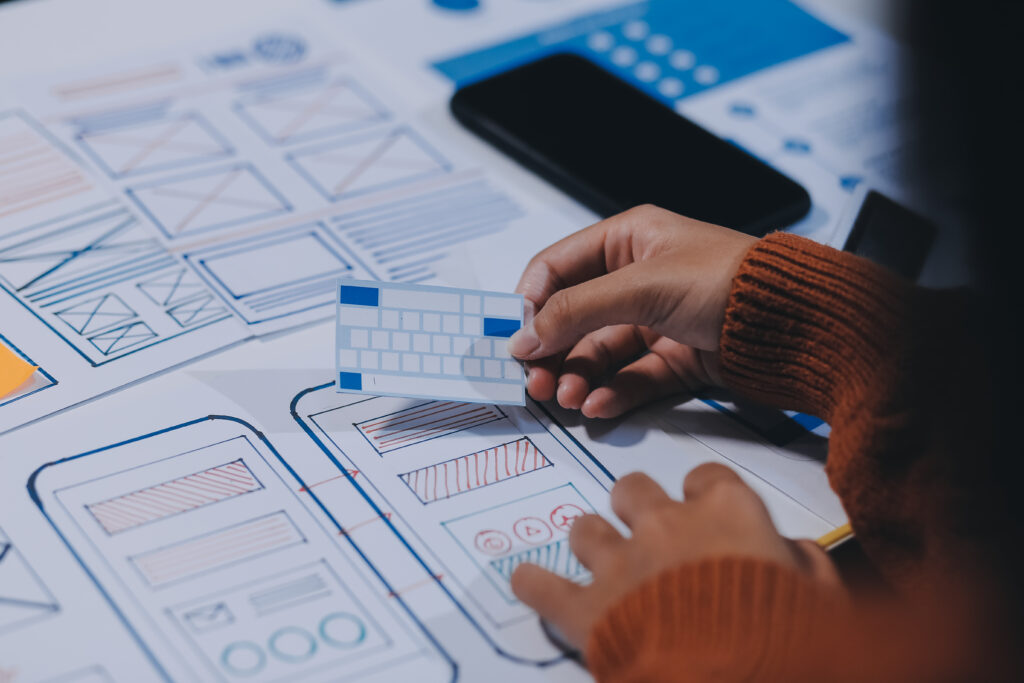
Accessibility is often treated as a “nice-to-have” or a checkbox. In reality, accessibility is a usability standard.
When your website is more accessible, it becomes easier for more people to navigate, understand, and take action—on mobile, on slower connections, with different abilities, and in real-world environments.
In 2026, accessibility-minded design is simply good design. Below are practical standards you can apply without rebuilding your website from scratch.
What accessibility means (in plain terms)
Accessibility means your digital content works for people who:
-
use screen readers
-
rely on keyboard navigation
-
have low vision or color blindness
-
have cognitive or learning differences
-
experience limited mobility or temporary impairments
-
browse on small screens or in bright light
The goal is simple: reduce barriers so users can complete tasks.
1) Color contrast: Make text easy to read
Low contrast is one of the most common accessibility issues—and one of the easiest to fix.
Best practice
-
Avoid light gray text on white backgrounds
-
Avoid placing text over busy images without a clear overlay
-
Ensure buttons and links are easily distinguishable
Quick check: If it’s hard to read in daylight on a phone, it’s likely not accessible.
2) Typography: Size and spacing matter
Accessibility isn’t only about fonts—it’s about readability.
Best practice
-
Use readable body text sizes (especially on mobile)
-
Increase line spacing so text doesn’t feel crowded
-
Avoid long walls of text—use headings and spacing
If users can’t comfortably scan your page, they won’t stay.
3) Headings: Structure your content like an outline
Headings help everyone, but they’re essential for screen reader navigation.
Best practice
-
Use one clear H1 per page
-
Use H2s to break major sections
-
Use H3s for sub-sections
-
Don’t use headings purely for styling
A well-structured page is faster to understand and easier to navigate.
4) Links and buttons: Make actions obvious
“Click here” doesn’t help users understand what will happen next.
Best practice
-
Use descriptive link text: “View Services” vs “Click here”
-
Keep button labels action-based: “Book a Consultation,” “Request a Quote”
-
Ensure buttons are large enough to tap on mobile
5) Forms: Reduce friction and improve completion
Forms are where leads are won or lost.
Best practice
-
Label every field clearly (don’t rely on placeholder text only)
-
Keep forms short (collect what you need, not what you can)
-
Provide clear error messages
-
Make the submit button obvious and consistent
If your form is confusing, users abandon it.
6) Keyboard navigation: Your site should work without a mouse
Many users navigate with keyboards or assistive devices.
Best practice
-
Users should be able to tab through links and buttons logically
-
Focus states should be visible (so users know where they are)
-
Avoid interactive elements that can’t be accessed by keyboard
If a user can’t reach your menu or CTA without a mouse, the site is not accessible.
7) Images: Add alt text that provides meaning
Alt text isn’t a formality—it’s how screen readers understand images.
Best practice
-
Use alt text that describes the content or function of the image
-
Skip alt text for decorative images (or mark them as decorative)
-
For buttons/icons, ensure labels exist
8) Motion and animations: Keep them subtle and optional
Animations can cause discomfort for some users, and heavy motion can reduce usability on mobile.
Best practice
-
Avoid excessive motion backgrounds
-
Use simple transitions
-
Don’t rely on motion to communicate critical information
A practical approach: “Accessibility-minded” upgrades
You don’t need to redesign everything to improve accessibility. Start with:
-
contrast and typography
-
heading structure
-
button labels and link clarity
-
form usability
-
mobile layout checks
These deliver immediate UX improvements and reduce friction for all users.
Final thought
Accessibility is one of the most effective ways to improve user experience—because it forces clarity. When your site is readable, structured, and easy to navigate, more visitors become leads.
If you want help identifying high-impact improvements, an accessibility-minded UX audit can provide a prioritized fix list you can implement quickly.


“As a small business, having a design partner we can rely on is invaluable. myVisualConcept handles all our creative needs — from social media graphics to seasonal promotions — with consistency, professionalism, and a deep understanding of our brand.”